Full story
How a soccer parent became the whistle

Atlanta
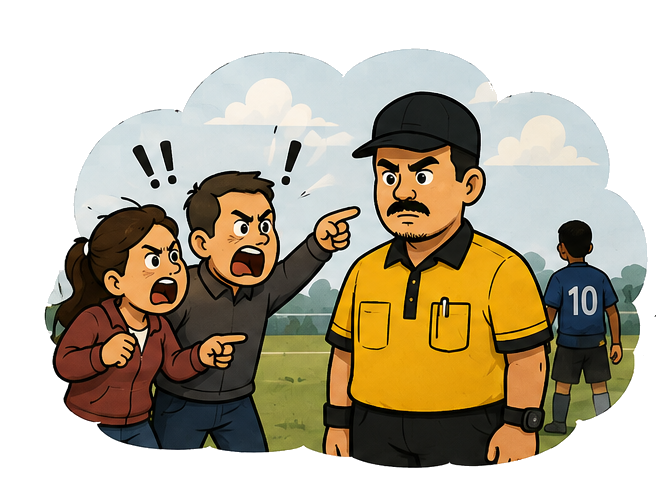
Years ago I was simply a soccer parent. Officiating wasn’t on my map. Then came one of my daughters’ matches in Atlanta — and an official who, after early mistakes and sideline heat, chose pride over correction and doubled down on every poor decision.
I recorded the match, cut a “referee highlight reel,” and put it on YouTube. It drew enough attention that the president of my daughter’s club called me.
The call
He framed himself as a protector of referees. What I heard was a polished defense of his club’s image. He’d traced the video because it involved his teams, and argued that — given the U.S. referee shortage — posting it was cyberbullying. He wanted it down.
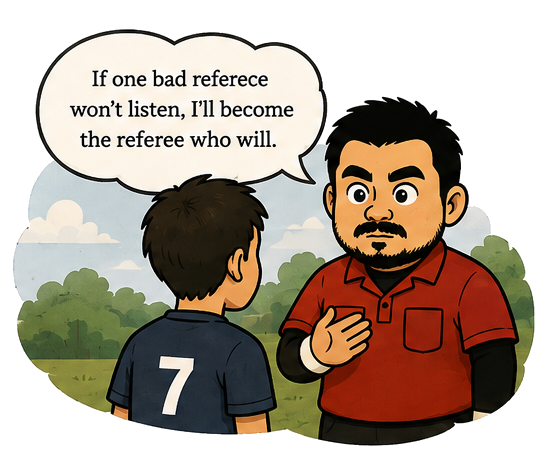
I said no. A bad referee is still a bad referee, and I’m allowed to say so outside the match. I also told him: if this made one poor official in Georgia quit, I’d become a referee myself and show what it looks like to own mistakes and keep learning.
About a year later, already in uniform, I took verbal abuse from a coach at his own club. The president who once preached “protect the refs” went quiet. Around then another club from North Carolina was trying to recruit my daughter. I left.
I kept the promise
So I became a referee. I’ve made mistakes too — especially early. When I have, I’ve told frustrated parents my ability has limits while assuring them I gave everything I had. When a mistake couldn’t be fixed, I’ve apologized to the players afterward.
That’s why I still push back when “referee shortage” is used as a blanket shield for bad work. Scarcity should never mean unlimited tolerance for incompetence. I’d rather see the unfit leave than dilute the people who care. And I still can’t forgive that Georgia official whose performance is the reason I wear a badge at all.
Quality over quantity
I entered oddly — but I still reject the line I hear too often, even from veterans and assignors: that because the country “needs refs,” we (the parents) must swallow every insult and every mediocre performance. I’d rather fewer excellent colleagues and a harder week than a padded roster of people who shouldn’t be there.
I’ve watched too many officials treat this as a paycheck — indifferent to quality, rude to players and parents who ask questions, and careless about finishing matches well. They erode the reputation of those of us who treat it as craft and calling.
On complaints
If you believe a match was mishandled, file a proper complaint. It rarely ends a career — and that’s okay. It can still get an assignor to give real coaching. Spite aimed at destroying someone’s livelihood is a different project entirely, and usually a fantasy: even extreme personal cost on your side won’t reliably remove an official who wants to keep working.
Hold the craft accountable. Demand better. Just don’t confuse revenge with reform.